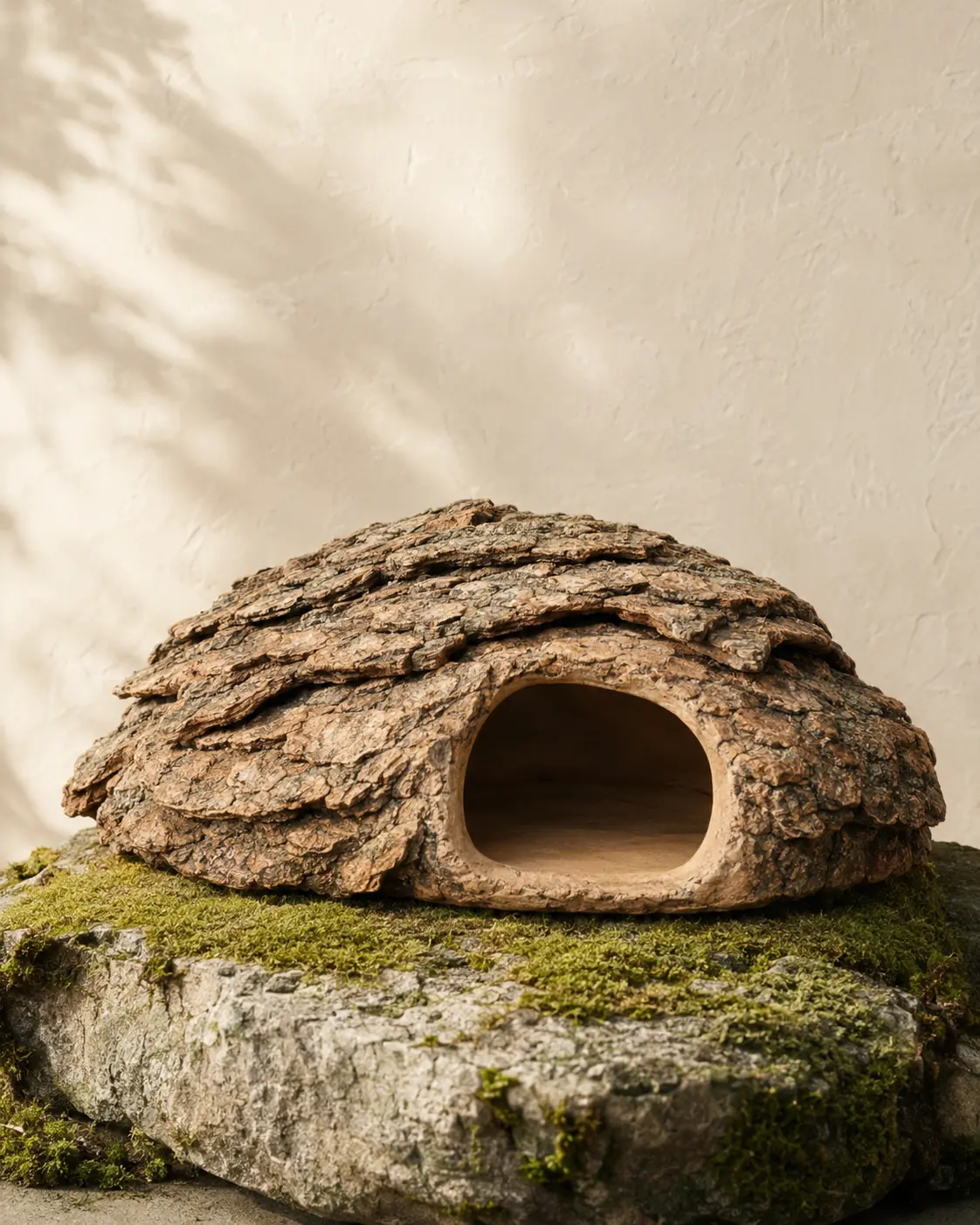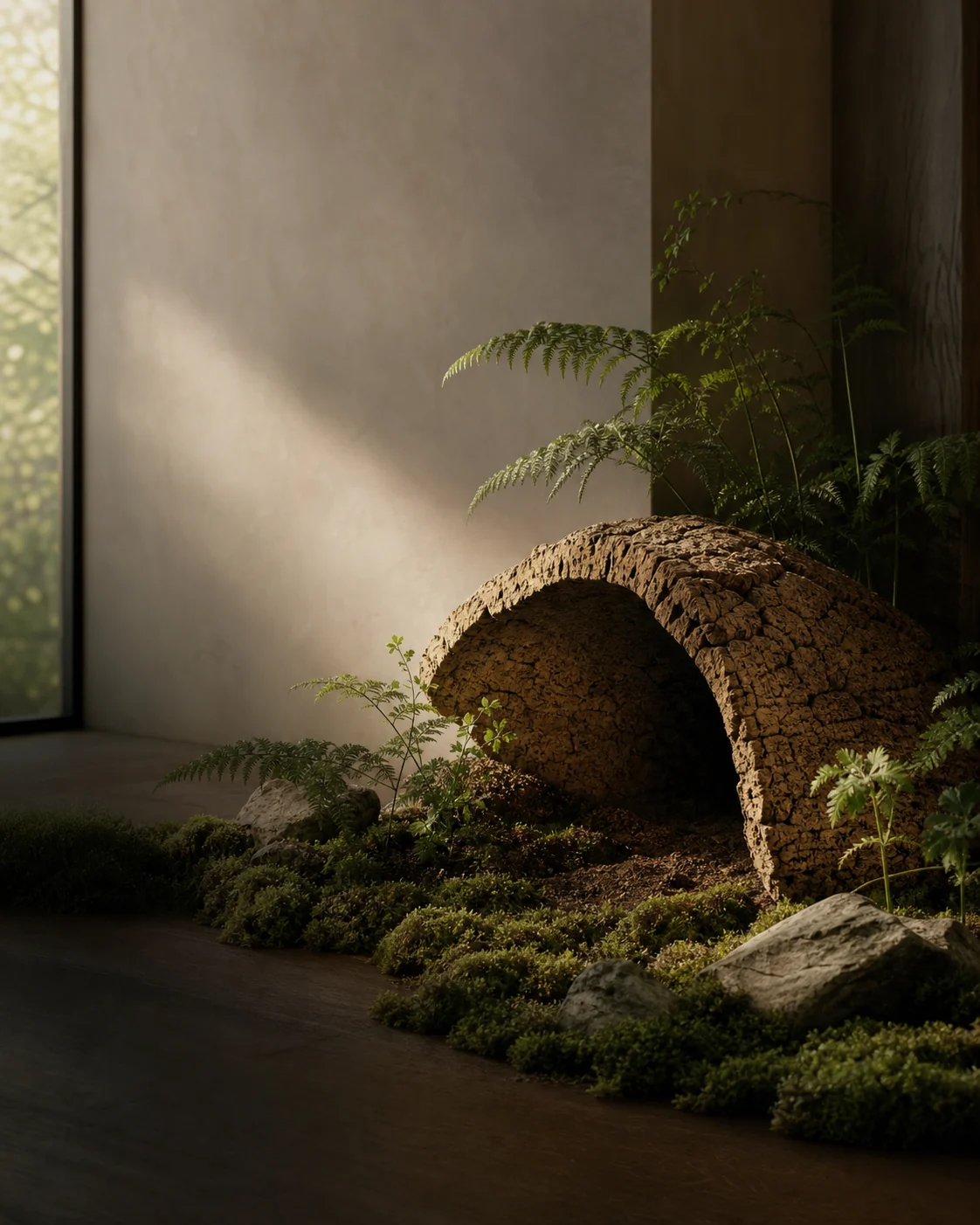
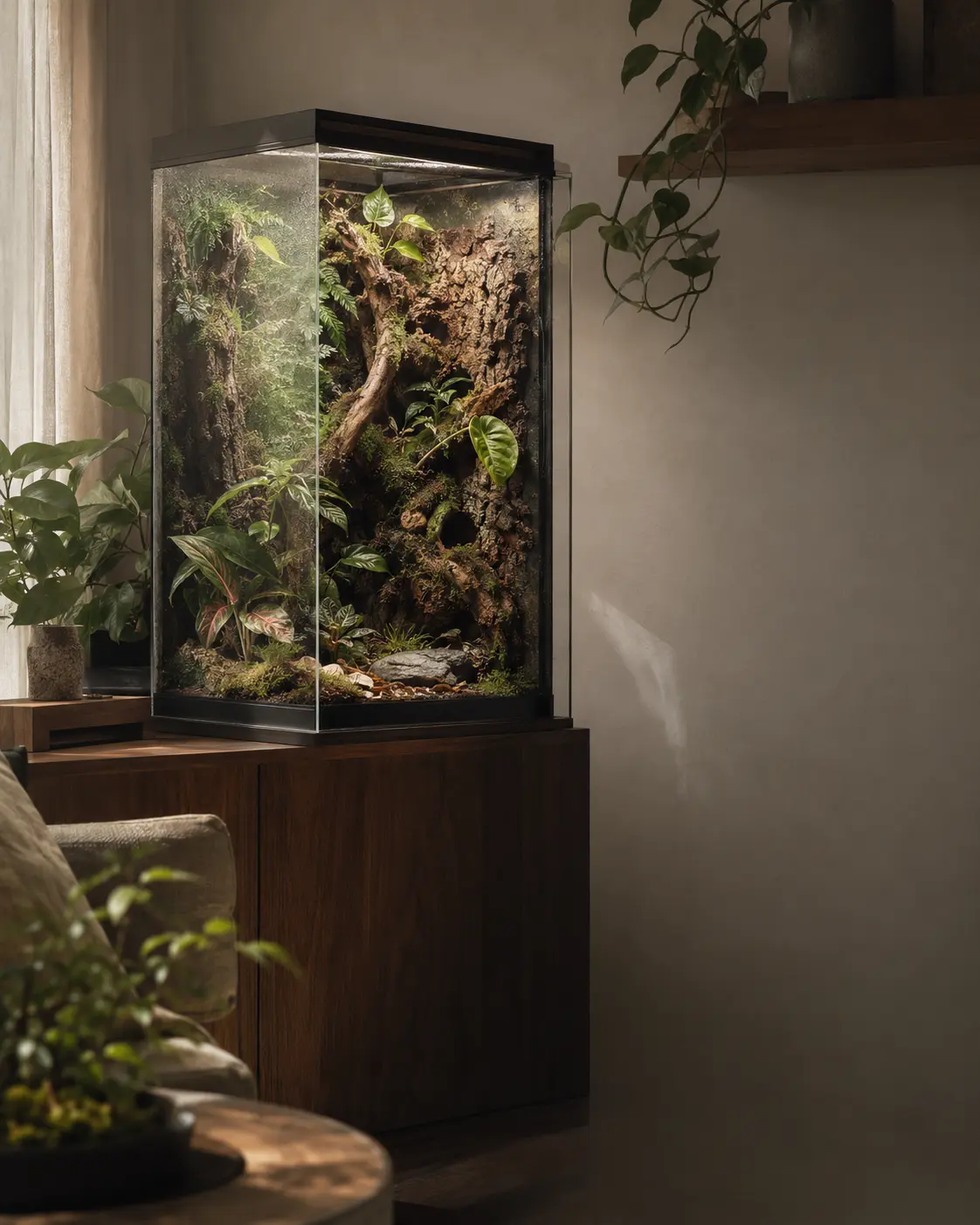
The most useful habitat review starts with observation. Where does your little soul rest, travel, pause, hide, and return? These patterns reveal whether the home offers enough choice.
01. Watch before changing
Observe at different times of day and record where time is spent. Repeated use of one corner can be a preference, but it can also signal that the rest of the home feels too exposed or sits outside the preferred climate range.
A short daily note is more useful than a large redesign based on one moment.
02. Map movement and rest
Look for a continuous route between warmth, cooler air, water, shelter, and activity areas. A little soul should not need to cross a wide exposed space to reach a basic resource.
- Ground-led homes need clear paths, stable footing, and low cover.
- Climbing homes need connected branches, safe landings, and sheltered upper resting points.
- Burrowing homes need suitable depth and a base that holds the required structure.
03. Offer microclimate choice
Temperature and humidity are not single numbers across an enclosure. Measure several useful positions and make sure shelter exists within the available zones.
If a change is needed, alter one element, record the result, and allow enough time to see a pattern.
04. Notice meaningful change
Changes in appetite, breathing, movement, body condition, or waste can have many causes. Record what changed in the environment and contact a qualified exotic-care veterinarian when a change is sharp, persistent, or concerning.
Before you move on
A calm-care checklist.
- Observe at more than one time of day
- Record favourite resting and movement areas
- Check readings at those exact positions
- Keep covered routes between key resources
- Change one variable at a time