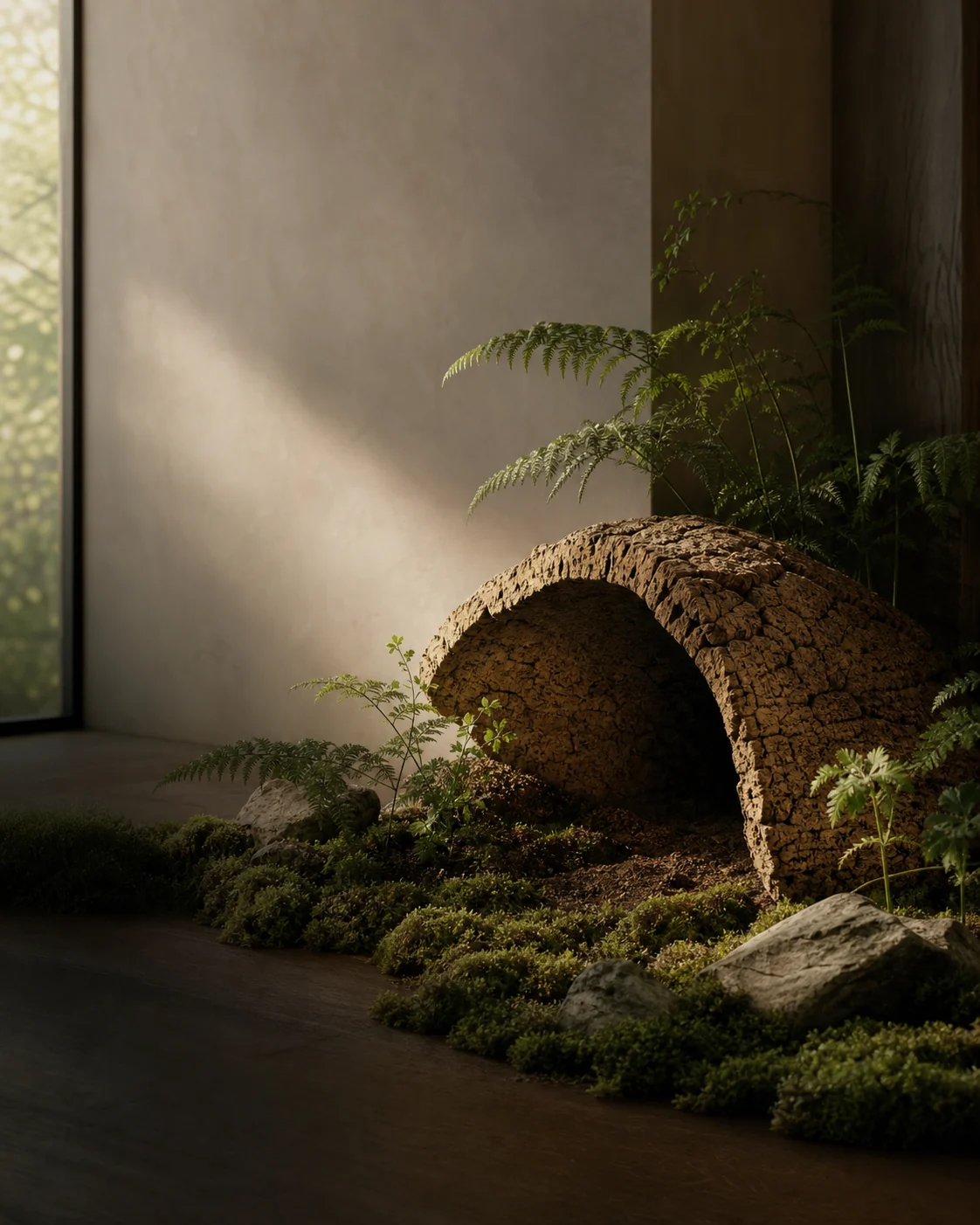
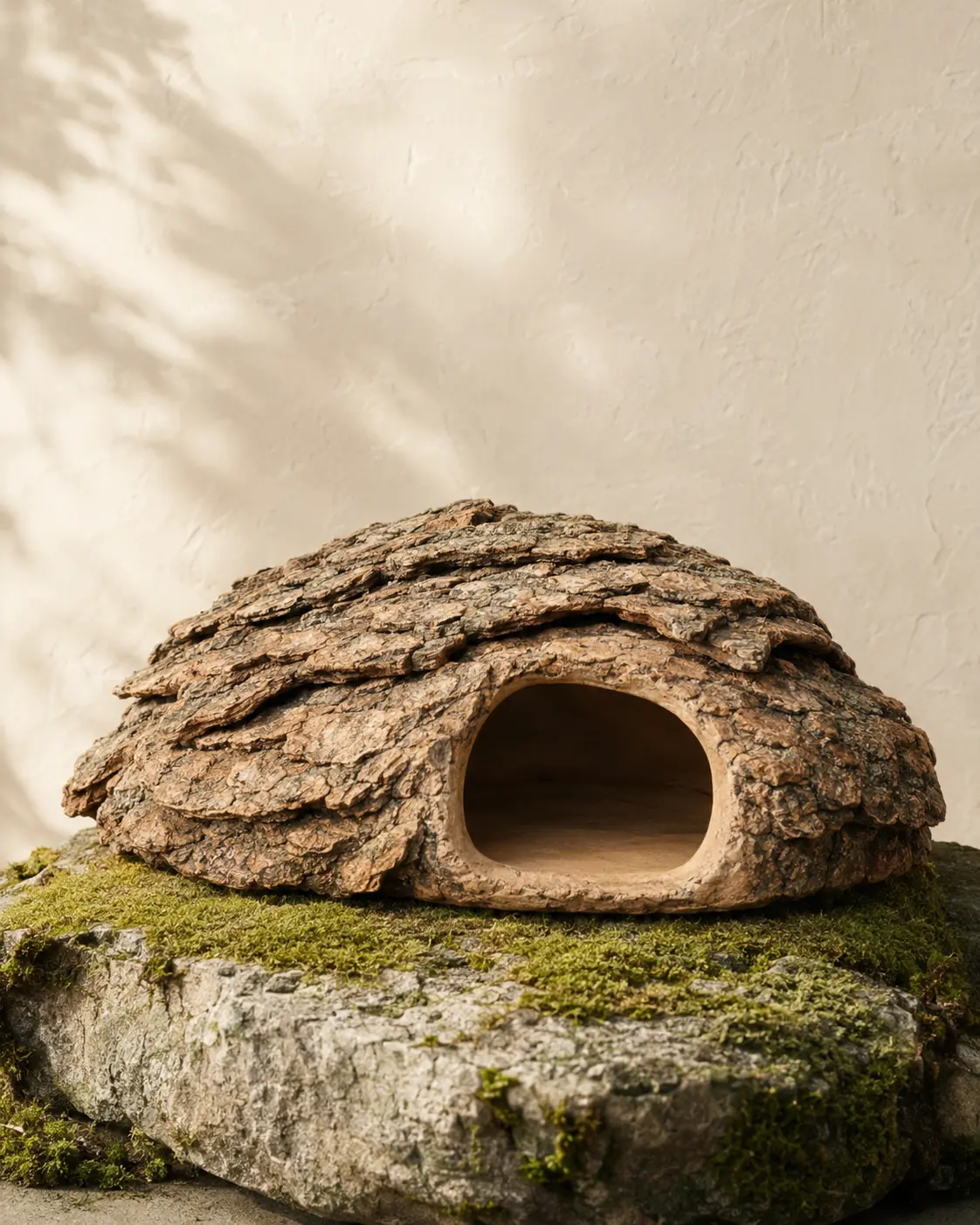
Shelter is not a single object placed in an empty enclosure. It is a network of secure resting places, visual cover, and quiet routes that lets a little soul choose when to be seen.
01. Offer real choice
Place secure resting options in different useful climate zones. One hide can force a choice between comfort and safety; several well-positioned options allow both.
Match the location to natural movement. Ground-led, climbing, and burrowing homes need shelter at different heights and depths.
02. Choose a reassuring fit
A resting space should feel enclosed without trapping the little soul or creating unsafe contact with heat. Openings, internal space, stability, and the ability to turn or settle naturally all matter.
03. Connect the safe places
Use foliage, cork, branches, ledges, or other suitable forms to break long sight lines. Covered routes help connect shelter, water, warmth, and activity areas.
Secure every heavy or elevated element so digging, climbing, or routine care cannot make it shift.
04. Keep shelter maintainable
Choose materials that can be inspected and cleaned. Position key shelters so checks are possible without rebuilding the habitat, while still preserving a sense of security.
Before you move on
A calm-care checklist.
- Secure resting choices in more than one climate zone
- Fit and opening appropriate for natural rest
- Covered routes connect important resources
- Heavy and elevated elements firmly secured
- Shelter can be inspected and cleaned safely