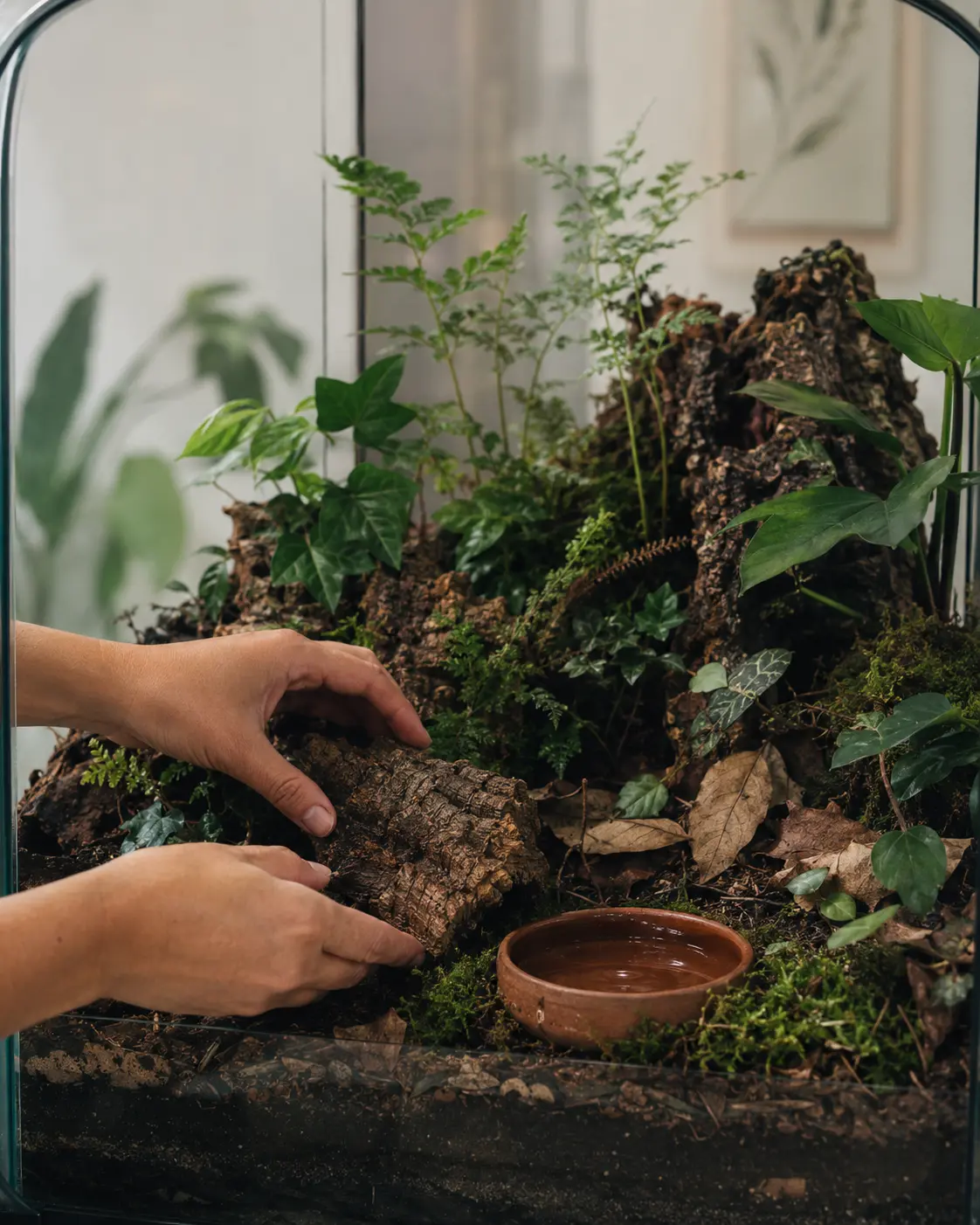
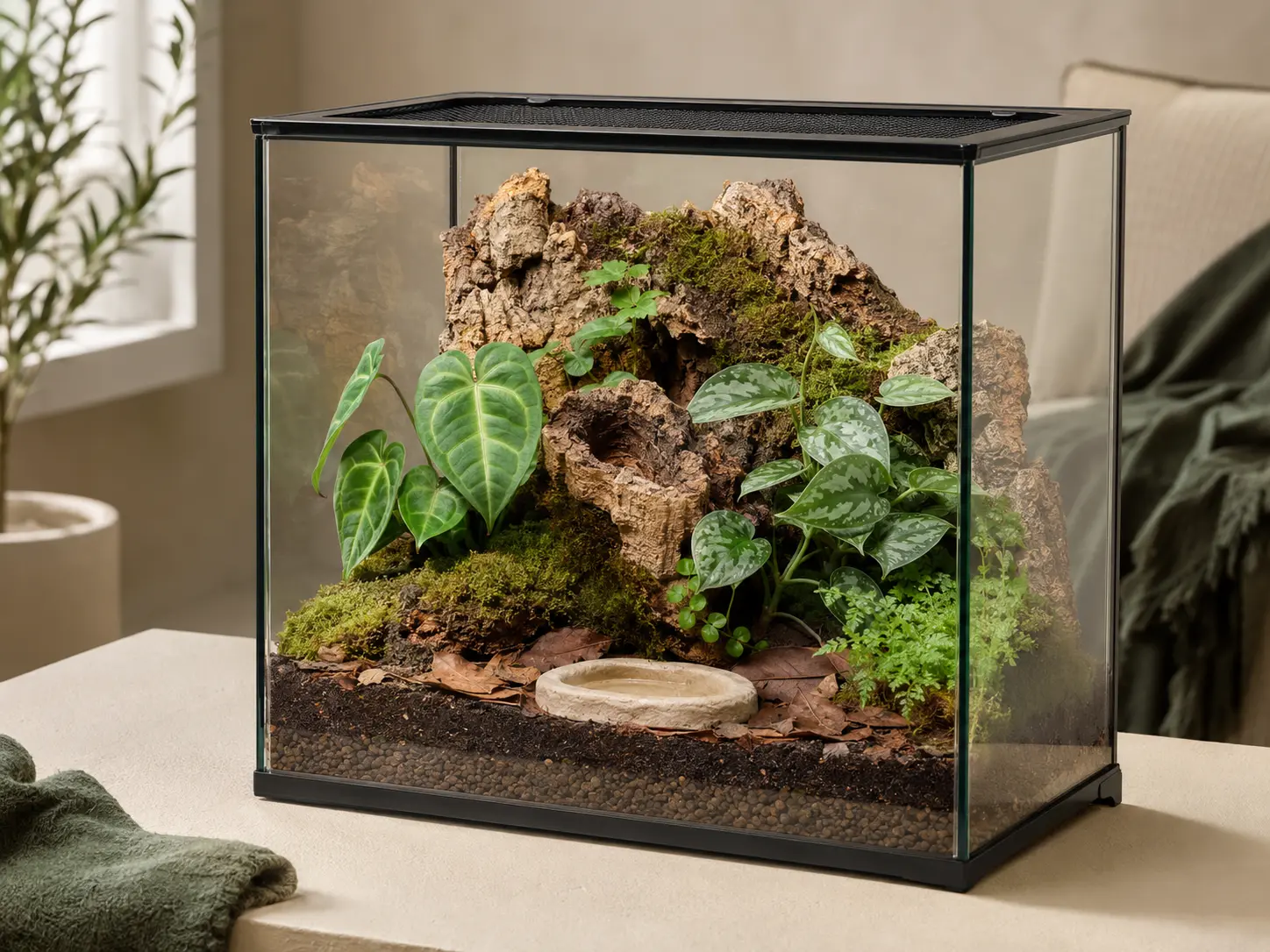
The first week is for settling, observing, and protecting stability. Prepare every essential in advance so the little soul arrives to a home that has already been tested.
Before arrival
Run heating, lighting, and humidity support before the move. Record readings in the warm, cool, sheltered, and active areas across day and night.
Prepare water, secure shelter, the correct base, and the first feeding plan. Remove anything unstable or difficult to clean.
Day 1: quiet and cover
Move calmly, confirm that doors and equipment are secure, and allow uninterrupted time to settle. Keep handling and room traffic to the minimum required for safety and essential care.
Days 2-3: observe the basics
Check climate readings, water, resting locations, breathing, movement, and waste without repeatedly opening the home. Follow the established feeding schedule rather than trying to force activity.
Days 4-7: look for patterns
Review the observation log. Make only necessary, evidence-led adjustments and change one thing at a time so the result remains clear.
Contact a qualified exotic-care veterinarian if appetite, breathing, movement, posture, or waste changes sharply or causes concern.
Before you move on
A calm-care checklist.
- Home tested before arrival
- Quiet settling period protected
- Climate and water checked daily
- Movement, rest, feeding, and waste logged
- Only one environmental adjustment made at a time